|
| |
|
How To Fix The PCI Express x1 Bug
|
User of ASUS and Gigabyte motherboards (maybe others as well)
may be affected by a PCI Express x1 bug which causes a tremendous drop
in performance. ChampionLLY takes a look at the motherboards and
graphics cards affected by this problem and what solutions work, and
what doesn’t.
In the second part, he takes a look at the effect that PCI Express x1
bug has on the performance of your system. The results will shock you.
|
|
|
|
 |
|
Beginners Guides: Understanding and Creating Batch Files
|
In this Beginners Guide, PCSTATS is going to walk you through one of the simplest but potentially most powerful ways to customize and simplify the management of your computer: batch files. These text files are easy to create, and only as complex as you want them to be, but they can perform many useful operations from file backups to system configuration quickly and automatically.
At their simplest, batch files are text files which execute one or more command prompt commands in a specific order. The power of a batch file lies in the way that it allows you to combine multiple commands into one batch file 'program' and customize the way that each command operates.
|
|
|
|
 |
|
Beginners Guides: Windows XP Safe Mode Explained
|
Like a lot of the people in the computer hardware journalism business, many of us here at PCStats got our start working tech at a computer store. Now if you've ever done technical support, you know the inherent difficulty of trying to troubleshoot a problem over the phone, especially when the customer is a computer novice. A lot of our work on the various Beginner's Guides can be directly attributed to our desire to make everyone's life easier by providing basic computer know-how in an easy to access form both here, and in the PCstats Newsletter.
|
|
|
|
 |
|
Beginners Guides: Windows Command Prompt
|
Back in the heyday of text-based operating systems like Unix and DOS, the command prompt was the operating system, and not knowing how to use it meant that you could not really use your system without someone experienced in computing holding your hand. This was the era of computing clubs, when getting to grips with your computer required some serious devotion and learning.
When the most successful graphical operating systems, the various Apple Mac and Windows incarnations came along, they triggered a massive increase in the popularity of computers by simplifying the whole process of using them. No longer did users have to memorize reams of commands in order to simply configure and navigate around their computers.
|
|
|
|
 |
|
Beginners Guides: Diagnosing Bad Hard Drives
|
The hard drive is the single most important device behind the mass acceptance of personal computers in the home and workplace. The ability to save significant amounts of data within a computer itself, rather than being forced to place it on external media finally fulfilled the potential that the PC had never quite lived up to, at least as a business tool. Hard disk storage ability has increased massively since the early days of the technology, and will likely continue to increase in the future as drive's cost per megabyte of storage drops equally fast.
Unfortunately, the underlying technology of hard drives has changed little in the years since their invention, meaning that their essential weakness still exists. The simple fact is that hard disks are mechanical devices with moving parts, and as such, will fail eventually and inevitably.
|
|
|
|
 |
|
Beginners Guides: 101 Tech Tips and Tweaks for Windows
|
PCSTATS has a little present for you this week - a massive Tech Tip guide for Windows; 101 useful and sometimes spicy Tweaks and Tips that you can use to improve your clunkly PC! Some you might know, some you might not, but guaranteeded there is a lot of interesting advice in this guide.
From Beginner's Tech Tips to registry tweaks, it's all present and accounted for. This list is presented in two sections. The first is composed of tweaks and tips you can implement using options already present in the Windows XP interface.
The second is composed of Registry tips which require the use of the REGEDIT program. Instructions are included, so read on, and enjoy!.
|
|
|
|
 |
|
DIY Guides: How To Install/Remove Intel Socket 1366 CPU
|
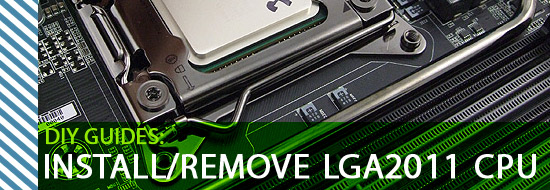
Intel accomplished a couple of noteworthy things with its Core i7 socket 1366 processor formfactor, the most noteworthy was integrating the memory controller directly onto the CPU die to substantially reduce the complexity of the motherboard. Major architectural changes were also brought about by the Intel Core i7 family of processors, but like the socket LGA775 Intel Core 2 Duo processors that preceded it, the Core i7 is a pinless chip. Removing the vulnerable and delicate interface pins from the bottom of a CPU make possible increasing pin densities that complex CPUs demand. It also increases the complexity and risk involved in installing one of the new socket LGA1366 processors into a motherboard.
|
|
|
|
 |
|
|
|
|
|
Exploring CPU Performance in Vista vs. Windows 7
|
The bottom line is that Microsoft Windows Vista quickly developed a ridiculously bad reputation - Ford Pinto bad. Droves of early adopters retreated back to the safe confines of old but reliable Windows XP, and laptop manufacturers even offered "downgrade options." Microsoft doubled its efforts to make Windows 7 its salvation, and Win 7 has largely succeeded in that regard. While most of the attention has been directed at Win 7's improved user interface, there are still several questions about its performance on older computer systems.
The CPU landscape has changed dramatically from 2006 to 2010, and while it wasn't uncommon to be using a single-core CPU four years ago, it's next to impossible to find a processor with less than two cores nowadays. Quad-core CPUs and HyperThreading have entered into the lexicon and a lot of software is now written to take full advantage of current multi-threaded chips.
|
|
|
|
 |
|
|
 |
|
Configure Backup and Restore in Windows 7
|
In a previous article here on C.O.D. (Essential Windows 7 Tweaks: Part 1), I
mentioned it's my opinion that users should disable the system restore features
in Windows 7. Outside of the resources associated with running the task, I
feel as though it provides a false sense of security for Windows Users and does
nothing for users plagued by things worse than failed updates. So what is the
answer? Windows 7 comes with Backup and Restore...
|
|
|
|
 |
|
Building Computers for the Weekend Geek, Part 2
|
In this followup to part 1, we'll be going over the remaining components that are essential to building a system from scratch. Grab your thinking cap and your anti-static wrist strap, and let's get started!
|
|
|
|
 |
|
HTPC or used as a laptop backup and data recovery
|
Patriot memory was established in 1985, and has manufacturing facilities in both Fremont California and Taipei. Over the last few years, Patriot have made themselves popular among PC enthusiasts with their DRAM memory modules, and more recently with Solid State Drives. The Convoy 425XL is a natural extension of this memory and storage background, as it provides more storage solutions for 2.5” drives. Compatible with both Mechanical and Solid State Drives, the 425XL allows a user to pack up to four 2.5” storage devices into a single 5.25” drive bay in a PC.
The Convoy 425XL brings enterprise level data security and expandability to even Small Form Factor PCs. Whether backing up digital memories, school or business documents, adding storage capacity for a HTPC or used as a laptop backup and data recovery tool, the Convoy 425XL brings many great features of an enterprise storage device to the mainstream user without the associated “enterprise tax.”
|
|
|
|
 |
|
Weekend Tweaking - Tips and Beginners Guides to Make your PC Run Faster!
|
PC Crashed and you can't afford to take it to the repair shop? Save some time
and money by using PCSTATS' extensive knowledge to put your PC back into top running condition! Dig into a pile of handy Beginners Guides, sweep the performance sucking
dust bunnies out of that old computer for good, and get more out of the PC you
already have!
Make your computer run better, run smarter, and maybe even faster! Starting from
the top, PCSTATS has award winning Beginners Guides to 99
Windows Vista Performance Tips and Tweaks, and 99
Performance Tips for Windows XP!! For your
convenience, the Top 20 Beginners Guides are listed at the bottom.
Windows Vista users will appreciate PCSTATS's guides to making older
software programs compatible with Vista, it's certainly a lot better than
buying all new programs. Since Vista can be a little tough on PCs, we also
discuss how to stop Windows Vista
from thrashing hard drives to death. PCSTATS covers installing
Windows Vista, and then it's naturally on to Vista crash
recovery and repair installs. If Vista is acting up, you'll want to read our
guide to safe
mode in Windows Vista before taking your PC to a repair center.
PCSTATS covers installing Windows XP and upgrading from Windows 98 to XP. Once you've got
XP installed, how about learning about some of its hidden features. Moving on, we tackle some of the
most asked computer questions like "how do I create MP3 files from my CDs?", " how do I burn CDs/DVDs and what formats should I use?." We also put you on
the right track towards converting your home movies into video files, then
turning those video files into DVDs. Most important of all, how
should you protect your data? We have some good answers, and
more than a few helpful hints to put you on the right track.
A second area PCSTATS Beginners Guides focus on is how to make
your computing life easier. For example, spam email has become a
painful fact of life for most computer users, but it doesn't have to
be such a major irritation. A beginner's guide to stopping spam gives you several easy procedures
which will quickly make spam email much less of an obstacle to your
use of email. Likewise, the proliferation of viruses and spyware on
the Internet threatens everybody. We give you a heads up on computer
safety in our guide to firewalls and Internet security , and cover the
safe removal of intrusive adware and spyware programs too. Do your wrists
and eyes ache from too much computer time? Check out PCSTATS' ergonomics guide for some handy tips towards more
comfortable computing.
Increasing your productivity within Windows XP is also a topic
covered in several of our guides. If you regularly work at home as
well as the office, you'll be interested in our guide to synchronizing files and folders so you'll always
have the latest versions of your files at hand with out confusion.
Own one of those handy-dandy USB key drives? take a look at a set of
cool and clever USB drive projects; you can do a lot more with
those things than you might think! Another handy thing to learn is
how to create batch files within Windows; these little
programs allow you to automate many of your most tedious tasks.
Tired of installing the latest Service Packs in every new Windows
XP system you create? Tired of installing Windows XP at all? Check
out this pair of guides, both of which are among the most popular
articles with overworked IT staff: 'Slipstreaming: creating a Windows XP CD with Service
Pack 2 included' guides you through the process of incorporating
the latest Windows XP Service Pack right into your operating system
CD, while the guide to creating a fully unattended Windows XP installation
CD gives you everything you need to know about automating the
Windows installation process in one handy location.
If you'd like to be sure that you have the basics of security and
computer hygiene nailed down, but don't have the time or the
inclination to learn about these subjects, try our quick guides to
securing your PC and getting rid of spyware, adware and browser hijackers.
If you want to know more about the guts of your system, the
hardware that keeps it going, PCSTATS has a series of articles just
the weekend hardware warrior. Take a look at our guide to assembling your own PC for a comprehensive,
step-by-step guide to building a home computer. Once you have that
mastered, you'll find the do-it-yourself guide to building a home theatre PC
a snap! The annual PC maintenance checklist helps ensure that your PC
will stay in top shape for as long as you own it. Sometimes it's
good to go back to basics, and a good way to start is with this
guide to computer memory. It explains how RAM works and why
you might want more of it if your computer is getting 'slow'. For PC
speed freaks, we cover RAID hard drive setups in detail, what they are,
and how to set them up. If you are feeling ambitious, how about a
bit of video card BIOS flashing?
Would you like to try overclocking but aren't sure where or how
to start? This guide to overclocking a videocard will get you moving in
the right direction. The companion guide to overclocking the processor, memory and motherboard
explains the overclocking process for the rest of the system
components; what the benefits are, as well as some of the potential
dangers.
Interested in what makes Windows XP tick? Then we have some
articles for you; this guide to the Windows XP registry will take you through this
storehouse of XP customization settings, while the comprehensive
article on Windows XP's Safe Mode will equip you to use this
powerful recovery mode to your advantage. For Windows Vista users, see our guide
to Safe Mode Crash Recovery in Vista.
I'd also suggest you check
out the guide to the Windows XP services for information on what these
behind-the-scenes programs do, and how to create your own. If you
are experiencing frustrating crashes or errors (and what Windows
user hasn't at some point or another?) this handy guide to
understanding and resolving the infamous BSOD (Blue Screen Of Death) error
should be interesting reading. Finally, get to grips with the Windows XP command prompt to increase your
knowledge and control of the OS.
Upgrading and updating your PC is another inevitable task that we
try to make easier. Take a look at PCSTATS' guide to flashing your motherboard's BIOS for one example.
If you've grown used to your Windows XP install and hate the thought
of reinstalling to accommodate a new computer system or hard drive,
see this time-saving guide to cloning windows XP for another solution... Want to
upgrade your system but don't know where to begin? We have the
answers in this guide to the fundamentals of updating a PC , and it will
certainly give you a helping hand in the right direction. If all you
want to do is upgrade your motherboard, we've got an article on
handling this complex operation too. No more service charges!
If you are tired of Windows altogether, or wary of Microsoft's
operating system validation requirement for downloading patches, why
not consider moving to Linux? PCSTATS has written three guides to
this alternative OS, covering the basics of getting familiar with the Linux KDE desktop and
then moving into the process of installing a Linux PC. In the third installment,
we walk you through the task of installing new software in Linux, and where to
find some productive programs for free.
Networking is a very important area of computer knowledge,
especially as many homes now have more than one computer. Sharing an Internet connection among the computers
in your household is a good start. If you're curious, PCSTATS also
has guides to home networking, allowing you to share files
between the systems in your home, and an article on the benefits of wireless networking. While wireless is
extremely easy to set up and use, it has some security concerns that
every user should know about. In PCSTATS' wireless security article, we provide any user
with the knowledge they need to secure their wireless network from
intruders. Advanced users may find this guide to Virtual Private Networks (VPN) and internet connection
security especially useful. If you have a printer, why not share
it over your network so that anyone in your house can use it? The
easy to follow printer sharing guide has the goods.
Once you have a broadband Internet connection, there are a lot of
interesting things you can do with Windows XP that are not
immediately obvious. For example, how about enabling remote access, so you can work on your
desktop from any Internet enabled computer in the world? Or maybe
you'd like to create your own FTP server, allowing easy file transfers
over the Internet? Perhaps you'd even like to learn how to create
your own weblog ('blog') a small personal website. Speaking
of websites, this guide to website hosting from a home PC has
that critical topic completely covered! It's all here
in PCSTATS collection of Beginners
Guides. Once you've got a blog or website going, how about
setting up an RSS feed so others can track your site easily? If
you check out several bookmarks every day, learning about RSS readers could save you a lot of time.
Hardware failure is an unfortunate fact of life for PC owners,
and one of the things that keeps computer stores in business.
Fortunately there are ways to detect problems before they happen,
and reduce the damage if your hardware should fail. Hard drives are
one of the focal areas for failure in modern computer systems, due
to their mechanical nature. They are also rather easy to erase,
accidentally or maliciously. In one of our most popular and
acclaimed guides, PCSTATS Beginners Guides looks at ways to restore your lost data in the event of just such a
hard drive disaster. On the same topic, our guides to diagnosing bad memory and bad hard drives as well as interpreting your computer's 'beep' error codes will help you
troubleshoot your PC at home. If you'd just like to expand the
amount of storage space on your PC, well we've covered that aspect
too with the guide to formatting and partitioning a hard drive!
Encryption and passwords are important facets of modern computer
use, especially where the Internet is concerned. These subjects can
be rather hard to understand for the average user, however. We've
attempted to set things straight in this walk-through of encryption and online privacy .
Locked yourself out of your computer or file by forgetting a
password? In twin guides, PCSTATS' examines the strengths and
weaknesses of Windows password security and document password decryption giving you the
knowledge you need to reclaim access. Knowing how to break back into
Windows, or a locked document or ZIP file isn't something you'll
need to know everyday, but when you're in a bind this information
can be a life saver. PCSTATS also examines how to 'harden' your laptop computer , so if it is lost or stolen, at
least your data will be safe.
For assorted tips and tweaks that can make your Windows XP
experience, cleaner, faster and uniquely yours, we present our most
popular set of PCSTATS Guides; 101 tips and tweaks for Windows XP and 104 Great Tech Tips for Windows XP. That's 304
useful tips, every one of them tested. You are sure to find
something you like in one of these articles.
For some comic relief, as well as a serious look into the kinds
of problems and errors of judgement that may one day destroy your
precious computer, take a look at the extremely insightful guide to
the most common ways to kill a PC. Why not visit
our feedback page and share your own stories once
you're
finished!?
Here are the TOP 20 PCSTATS Beginners Guides of all time... feel free to share this list on your blog or favorite forum.
|
|
|
|
 |
|
TechwareLabs Article: Building Computers for the Weekend Geek
|
The face of personal computing is constantly changing and evolving. There are more terms out there than ever before, which makes it harder and harder to keep everything straight. Is the i7 really better than the i5? Why are some computer packages so much cheaper than others? Is that barebones computer for $300 really worth it? What should I really look for when I look at the details of a “PC Bargain”? What does all of that stuff DO anyway?? I’ll try to answer some of those questions, and in such a way that even the Weekend Geek (if there is such a thing) won’t walk away scratching their heads.
|
|
|
|
 |
|
Video Frame Rates and Display Refresh Rates for Beginners Guide
|
We hope you've been enjoying our series of Beginner's Guides for HTPC and Home Theater. As part of the series, we’ve previously discussed video resolutions and how video information is displayed on a screen for a frame of video in our guide, Video Resolutions for Beginners. What we didn’t delve into much was the rate at which video frames are captured, or, in other words, the video frame rate. This guide will cover the basics of frame rates and how displays deal with the frame rates. We’ll try to cut through the marketing buzzwords like 120Hz, 240Hz, 600Hz sub-field drive, etc. so that you can make a more informed decision when purchasing your next display and how to insure an optimal viewing experience.
|
|
|
|
 |
|
Turn an HP SFF Computer Into a Great HTPC
|
Face it, most of us like the idea of having an HTPC (Home Theater PC) hooked up
to our TV. The flexibility we get with an HTPC over just a DVD player or a
gaming console is enough alone to justify the cost. I have built a bunch of
these for people and until recently, I have never used pre-built systems.
There are many advantages to building a custom machine for your theater, but the
biggest disadvantage is the cost. Lately, I have been using Small Form Factor
(SFF) HP's and believe it or not... they make great HTPC's.
|
|
|
|
 |
| |
|
|

| The best Guides by the best writers on the internet; PCstats Beginners Guides explain computers, software, and all those other wonderful things that cause you frustration.
Learn how to use your computer better, master the internet while protecting yourself, and know what to do when your hard drive kicks the bucket.
|
-
-
-
-
-
-
-
-
-
-
-
-
-
-
-
-
-
-
-
-
-
-
"Get the 'Stats and Stay Informed!"
|
|
|